How does the size of the serving glass (minimum 240 ml) and the size of India’s urban middle class (88% of the population) matter to Starbucks India? Let’s find out, in this second of two articles on Starbucks.
© Priya Narayanan, Assistant Professor of Marketing, IIM Kozhikode. Views are personal.
*
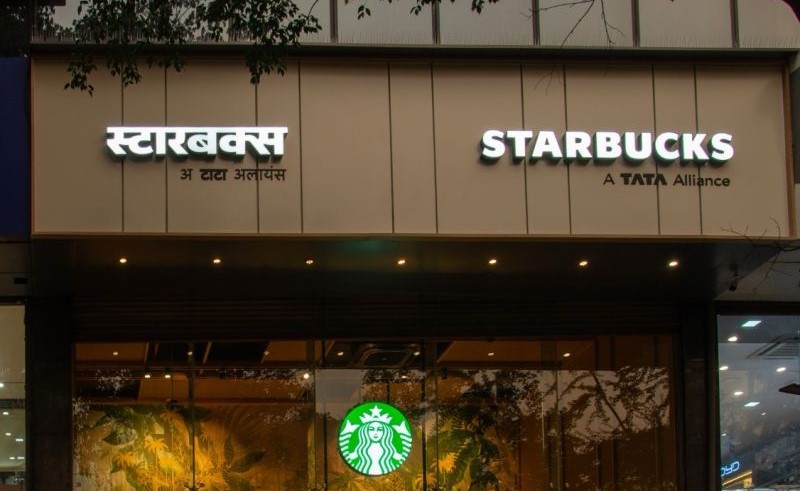
As part one of my two-part analysis of Starbucks (posted about a week ago) suggests, Starbucks globally seems to be in the kind of trouble that takes time to pass. However, closer home, things seem less stark. Tata Starbucks has two big factors going for it: advantage Tata that continues to give, and a growing market that is any MNC’s dream. But is that enough?
Before answering this, let’s address a niggling but real issue with Starbucks in India.
Indians are used to a tiny glass of “cutting chai” which is perhaps 60 ml (the doppio size, as it sometimes called). Starbucks coffees come in multiple sizes with approximate volumes for a Caramel Mocha being as follows: short 240 ml, tall 350 ml, grande 430 ml, venti 590 ml. There is sometimes a demi size as well, of 90 ml. Some of us know this, but the numbers are still incredible. So a venti is ten servings for an average Indian! Clearly, I exaggerate.
This is Starbucks style, one could say. But imagine a customer going to Starbucks where they expect to enjoy themselves, have a nice enjoyable drink and the Starbucks experience. And they have to order a short. How does that make the customer feel? Put down, to say the least? Maybe it’s just me, but if I were the customer, I want the grande or venti, and not feel sidestepped by the idea that the two Italian-sounding order sizes are not meant for me.
Starbucks understands this, which is why, since 2022, there is picco size as well. At 180 ml, this is your standard tumbler or “glass” size. But, when you are drinking 180 ml of something thick and creamy, you cannot eat because either your stomach is full, or your wallet is empty, or both. That’s not good for Starbucks or for the customer. And so, a few days ago, Starbucks came up with a classic menu with items as affordable as INR 150. (Those who like to live life large can still go to Korea and get a trenta of 890 ml. Now that’s a treat size!) Where’s the Starbucks menu train headed, one might be tempted to ask.
But back to business. Smaller servings feel like penny pinching, even as the Starbucks ambience feels luxurious. So, the restaurant is neither a special place for special people, nor a common place for the common ones. And this has been the Starbucks India story in its most recent history. Trying to be everything to everyone, and veering very close to being nothing to anyone.
The question then is who Starbucks should move close to. In India, the middle class is perhaps the most attractive, because the vast majority of urban Indians, even those by definition belonging to the lower class and the upper class, identify themselves as middle class, as evident from the results of a ‘YouGov-Mint-Centre for Policy Research Millennial Survey’ of 10,314 respondents from 200 cities and towns, reported in October 2024. (The typical share of lower, middle, and upper income classes is 20, 60, and 20% respectively. However, the share in this survey comes to 5, 88, and 7%, respectively. “Among those earning less than ₹50,000 a month, 90% consider themselves middle class, … so do 57% of those earning over ₹4 lakh a month.” Read more here.)
A core tenet of marketing is that what the consumer perceives is what matters. The route to volume sales in India is to appeal to the 88% who perceive themselves as middle class. But here’s the catch: to be a middle class brand is easy for home-born home-grown brands, but Starbucks, just like Decathlon and IKEA, rubs off as clearly “just not middle class yet.” To move from a perception of being too upper class and not for the middle class, to aspirational, affordable, and reachable upper class is perhaps the biggest challenge for mass premium Western brands wishing to grow in India today.
And that’s where brand Tata helps. Tata is an Indian brand to the core, and if we excuse the lavish splurges in sponsoring Indian Premier League cricket, Tata is every Indian’s brand. But does this help get more Indians into its coffee shops? At this point, the Starbucks brand comes into play. Except in name, Tata Starbucks is all Starbucks. This nearly rules out the benefits from grand Indian brand of Tata.
Add to the mix the high levels of inflation that has become almost a norm in recent times. At times of inflation, the middle class try to cut down on non-essentials. The lower class has nothing to cut down upon as they were already consuming only essentials and, in the insensitive reality of today’s world, they are no marketer’s business. The upper class would continue consuming what they did, as all marketers hope. But the middle class? And Tata Starbucks? For now, the CEO of Tata Consumer Products Sunil D’Souza tell us that “We will calibrate for the short term — maybe instead of opening 100 [stores], we will open 80 now, and next year we will open 120 instead of 100.” May the new year work out well for D’Souza and team.
*
Such is life, for even the Tatas and Birlas, and the Ambanis and Adanis, as the locals say, sighing in empathy.
*
This is part two of my two-part analysis of Starbucks. Read part one, on Starbucks global business: Why a Few Bad Quarters Might be Good for Starbucks.
*
Subscribe to my blog on the home page and you will never miss a post. No advertising, no spam, no other emails.
 Marketing, Real and Ideal
Pingback: Why a Few Bad Quarters Might be Good for Starbucks | Marketing, Real and Ideal