Why a Few Bad Quarters Might be Good for Starbucks

Starbucks was in the blazing limelight a month or so ago. This time the news was not a new product launch or a new store opening, but the ways that the new CEO Brian Niccols (replacing the incumbent Laxman Narasimhan before his term ended) intended to “make Starbucks, Starbucks again”. In his “open letter for all partners, customers and stakeholders”, Niccols acknowledged that Starbucks seemed to “have drifted from [its] core.”

Starbucks share price (see below) seems to reflect this view – a downward trend starting in early 2023 went on for well over a year is now beginning to pick up, with Niccols at the helm. Here is my (potentially contrarian, likely underinformed) view on the issues at Starbucks and how these could be solved. Don’t miss the bonus piece on Starbucks in India – coming up soon.

(Subscribe to my blog on the home page and you will never miss a post. No advertising, no spam.)
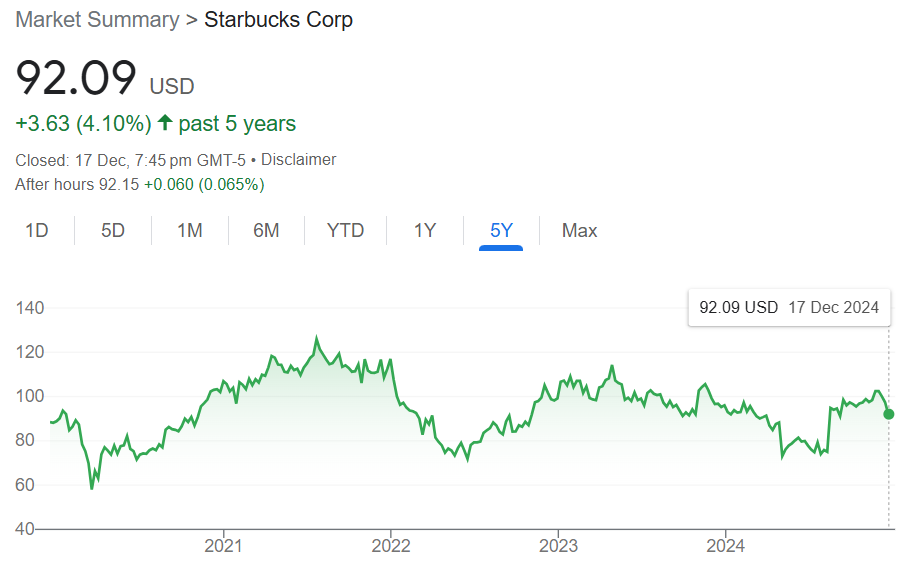
Share price trend of Starbucks, 2020-2024. Source: Google search.

© Priya Narayanan, Assistant Professor of Marketing, IIM Kozhikode. Views are personal.

*

All around Brian Niccols are people waiting and watching. And the last thing the newly anointed CEO of Starbucks probably wants is another bad set of quarterly financial results. But a few bad quarters might actually turn out to be good for Starbucks. Here’s why.

Continue reading
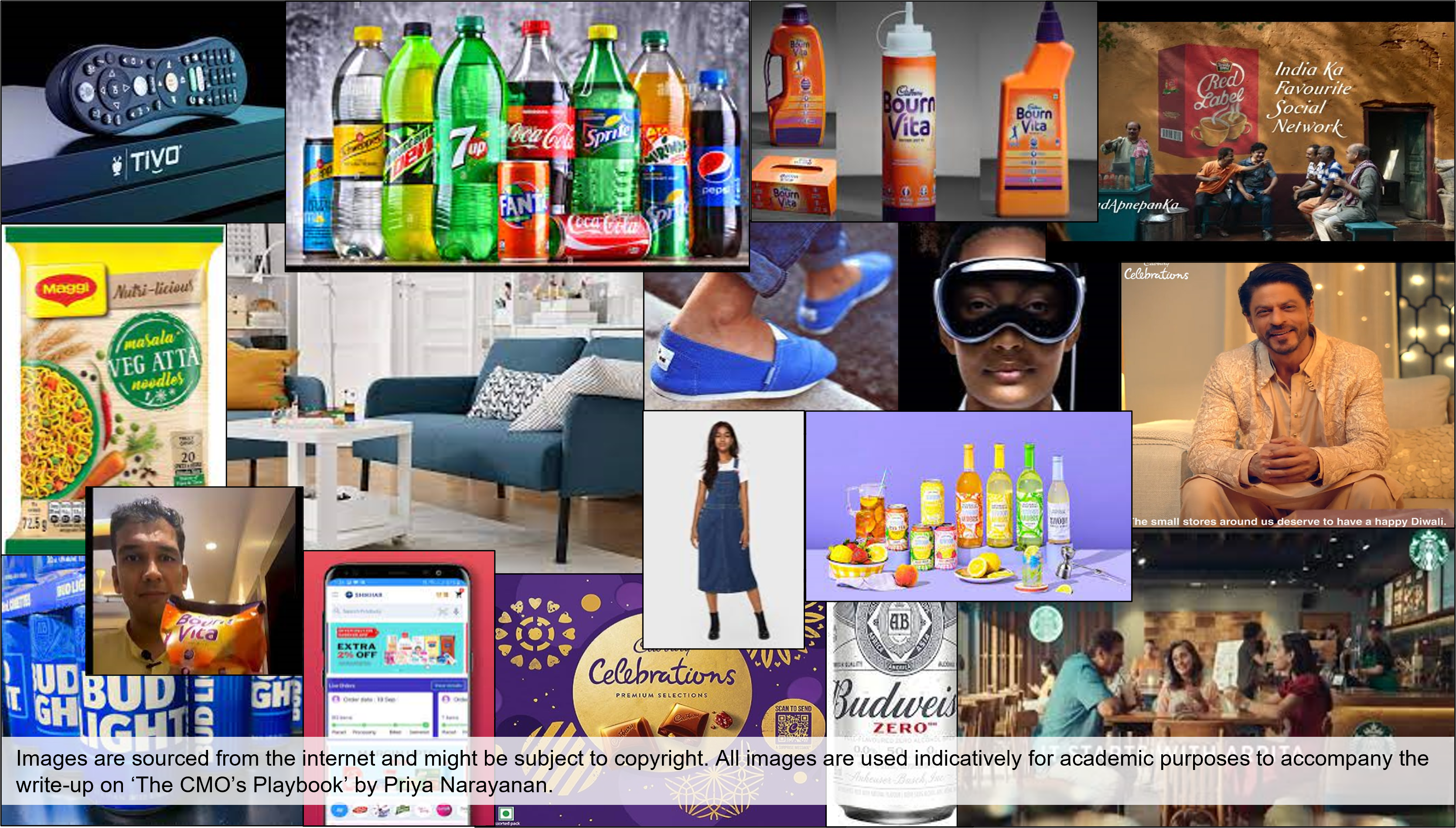
The CMO’s Playbook – This Year’s Collage

Whenever the small-group discussions in the classroom get noisy, it means one of two things: the students are so interested that they forget they are in a classroom, or there are movies playing in laptops, hidden by the huddle of heads. When these discussions are about marketing strategy in The CMO’s Playbook, it’s the former.

Sometimes we teachers are happy when the class is loud.

*

Here is a (hand-made) collage from the cases and contexts that we discussed in the course last year (2023 Jun-Aug). Can you identify all the companies and situations?!

*

Here are a few answers.

Coca Cola in India: A product portfolio worth boasting about, but who wants sugar and fizz now? This was (and is, and will continue to be) the dilemma of what is perhaps the world’s best built brand (for a brand backed by hardly any product worth its price). The new year spells interesting times for Coca Cola and more so for Coca Cola India with cannibals and competitors galore.

Continue reading

“India’s social network” is tea. The question is, which tea?!

First published July 2, 2023. Updated Oct 31, 2023 with a) an edited version of the ad shared by Red Label (following my article?!), and b) link to relevant research article.

© Priya Narayanan, Assistant Professor of Marketing, IIM Kozhikode. Views are personal.

A recent advertisement projects the humble tea as “India’s social network”. The ad is probably trending by this time, and worth at least one watch. The customer insight is spot-on. The video portrays various ways in which tea takes the form of friend requests, likes, shares, trends, stories, and so on in India, becoming a social network in itself. Engrossed as we are in the narrative, we forget that this is a brand’s commercial. Finally, though, the very last shot tells us that the ad is from Brooke Bond Red Label.

Screen shot from the “India’s social network” ad (watch the full ad here)

Well, as I watched the ad play, my thoughts centred on the cup of Kanan Devan (Tata Tea) tea that I usually drink in the morning and evening… steaming tea in a steel tumbler… the quantity never enough but I never make more… I am happiest when that tea is fully foamy at the top… and when I blow on it a teeny bit, the foam makes space for the beautiful brown color beneath… if the color is the right shade, the tea will be the right taste… oh yes, the tea packet at home is nearly finished and I need to buy another of the green packets soon…

Continue reading

Me e Mia: An Introspection into Brand Love

Part I: The Customer’s Perspective

© Priya Narayanan, Assistant Professor at IIM Kozhikode. Views are personal.

The other day, I shared a thought on LinkedIn on the Mothers’ Day video of a jewelry brand. Mine wasn’t a well thought out analysis, it was simply a spontaneous reaction to the content of the video. Writing the post, however, made me wonder: why did I care so much? Why was I so strongly unhappy with the ad? (The tone implied in “golden shoulders” surprises me now!)

Well, eight years ago, I wrote about this very same brand, on wearing the Tanishq Mia mantle of confidence.

Rereading that led to some introspection, which then led to the conclusion: I am in love. Yes, I don’t wear much gold jewelry but I love the brand that is Tanishq. Naturally, I felt the possessive anger that only love can lead to when Tanishq made a statement I didn’t feel good about or agree with. So says the marketer in me about the consumer in me. Me e mia. Me and mine. Me and my brand.

Continue reading

The Digital Customer: Differences from the Traditional Customer and Implications for Businesses

© Priya Narayanan, Assistant Professor of Marketing, IIM Kozhikode. Views are personal.

Teaching in a virtual classroom over the past few months has made me think about how the thoughts and actions of digital customers are different from what marketers have traditionally thought of as customer behavior. The pandemic has accelerated the change by getting people to engage in activities that they carried out either infrequently or probably never, be it online shopping, online banking, working at home, or even using a laptop. This article is an attempt to examine how today’s digital customer differs from the traditional customer, and the implications that this holds for businesses. The views presented here are based on my observations and do not claim to be comprehensive.

First, the digital customer is often, but not always, characterized by behaviors that digital technology allows for. The most common behavior is that of easy switching between activities, which was first evident when the television remote came into the market. Switching occurs because consumers want variety, can easily move between windows, and there are lots of activities competing for their attention – motivation, ability, and opportunity, as consumer research would call it.

Continue reading

Tell Stories to Sell

Nobody sees the whole, nobody can, at least. And so we extrapolate without even realising we do so. Very often, it is this extrapolated version of reality that determines our action and reactions. In business, this means that companies end up telling stories in order to sell.

Both brands and their buyers (customers) tell stories to each other, about each other. A brand that provides a coherent, consistent story to its buyers finds that the customers stay loyal. And this, despite there being strong competitive pressure, and minor market mistakes on the brand’s part.

Telling the right story is as important as providing the right service or the right product. A Cafe Coffee Day experience consists of the not just the coffee, and not even the ambience. Today’s customers view the brand in the context of their own lives. For instance, a birthday celebration at Cafe Coffee Day as compared to one at an Indian food place. And then the photos posted on Facebook with comments.