Why a Few Bad Quarters Might be Good for Starbucks

Starbucks was in the blazing limelight a month or so ago. This time the news was not a new product launch or a new store opening, but the ways that the new CEO Brian Niccols (replacing the incumbent Laxman Narasimhan before his term ended) intended to “make Starbucks, Starbucks again”. In his “open letter for all partners, customers and stakeholders”, Niccols acknowledged that Starbucks seemed to “have drifted from [its] core.”

Starbucks share price (see below) seems to reflect this view – a downward trend starting in early 2023 went on for well over a year is now beginning to pick up, with Niccols at the helm. Here is my (potentially contrarian, likely underinformed) view on the issues at Starbucks and how these could be solved. Don’t miss the bonus piece on Starbucks in India – coming up soon.

(Subscribe to my blog on the home page and you will never miss a post. No advertising, no spam.)
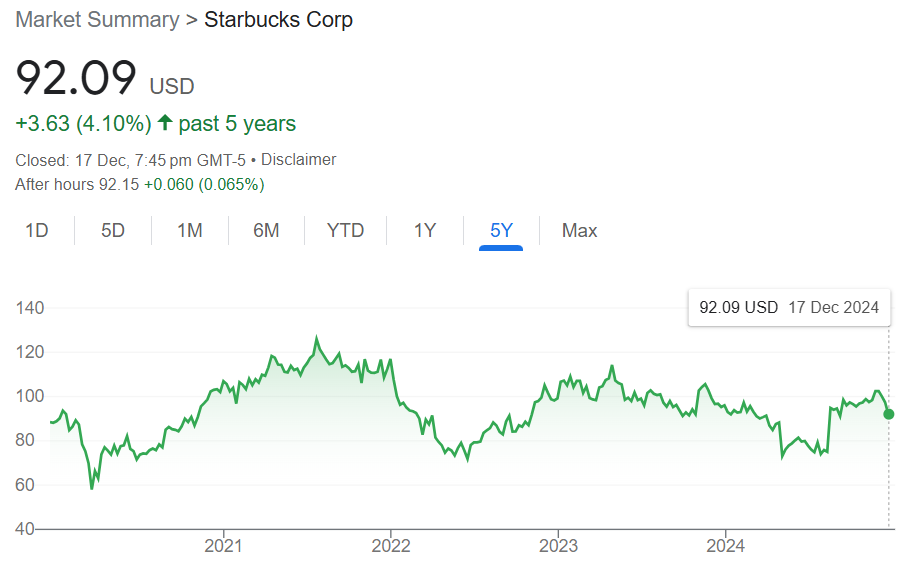
Share price trend of Starbucks, 2020-2024. Source: Google search.

© Priya Narayanan, Assistant Professor of Marketing, IIM Kozhikode. Views are personal.

*

All around Brian Niccols are people waiting and watching. And the last thing the newly anointed CEO of Starbucks probably wants is another bad set of quarterly financial results. But a few bad quarters might actually turn out to be good for Starbucks. Here’s why.

Continue reading

What are Systems for?

Systems, processes, methods are all orderly ways of doing things, important when organizations grow. And yet, systems are meaningful only if they support the greater cause of the organization’s existence. If rules are cited by rote and adhered to in order to be seen as adherent, our systems have failed us.

At one of the offices of a large company, a friend had to stand at the entrance waiting for the requisite documents that would give her permission to enter, even as the person she had an appointment with waited inside. “Madam, hamein toh apne aap ko bachake rakhna hai,” the security guard told her in full frankness: “Madam, we have to keep ourselves safe.” Of course, guards have to secure not just the premises but their own jobs too.

Companies do this so often with customers – at call centres, at (oxymoronic) customer care centres, at retail outlets, and at other touchpoints. Mostly because processes have been drilled into the very people who deal directly with customers.

When employees are empowered to allow exceptions, the results are exhilarating, such as when the call centre supervisor at an airline company allows an immediate waiver of the cancellation penalty, without requiring lengthy emails and multiple phone calls.