How to leverage India’s MarTech boom [Forbes India]

(c) Namrata Suryavanshi, Priya Narayanan, and Aditya Bhamidipaty

This article was first published online on May 23, 2025 in The Forbes India (online) IIM Kozhikode Thought Leadership section and is available here on the publisher’s website. The article below provides an updated version of the infographic from Scott Brinker’s Marketing Technology landscape.

Namrata is Director – Consulting & Customer Experience at FirstHive, a Customer Data Platform. Priya is Assistant Professor of Marketing at IIM Kozhikode. Aditya is Founder & CEO at FirstHive.

*

Imagine this: you’ve just landed in Barcelona after a gruelling 24-hour flight. You’re exhausted, and all you want is to check into your hotel and rest for a while in those soft new fancy pyjamas you bought for this trip. But then, reality hits—you realise your baggage hasn’t arrived. Panicked, you rush to the airline authorities, and they assure you that your luggage will be delivered to your hotel… in two days. Frustrated, you turn to social media, venting your anger and tagging the airline. Within seconds, you receive a response. But instead of empathy, you’re greeted with the last two words you want to see right now. Any guesses? “Thank you for sharing your feedback.”

Now, your frustration multiplies. The airline seems robotic and indifferent—completely out of touch with your situation. You might even vow never to fly with them again. So, what went wrong here? The airline relied on automated technology to send an instant response, but the message lacked context, empathy, and personalisation.

Could the airline have used smarter technologies to gauge your frustration and tailor a response using generative AI? Absolutely. And that’s exactly what we’ll explore in this article—how marketers, particularly in India, are adapting to MarTech. We delve into the unique challenges Indian marketers face, especially when bridging gaps arising from multiple cultures, languages, and geographies, and how technology can be a game-changer in delivering personalised, contextually relevant experiences.

Continue reading
Take Two: The Future of the Two-Year Full-Time MBA in India

© Priya Narayanan, Assistant Professor of Marketing, IIM Kozhikode. Views are personal.

This article was first published online on December 13, 2024 as a special feature in the IIM Ahmedabad alumni magazine WIMWIAN and is available here on IIMA’s website for the magazine. Note: I hold an MBA (the two-year full-time kind!) and a PhD, both from IIM Ahmedabad. The programs that I teach at IIM Kozhikode are listed at the end of the article.

*

Recent months have witnessed an emerging debate on the relevance of the two-year full-time MBA programmes across B-schools in India. With the rise in online and hybrid programmes boosted by the pandemic, and prospective students reconsidering spending two full years on academics, the flagship postgraduate programme at IIMs and other B-schools is under scrutiny.

To understand the issue, it is important to note that IIMs, especially the older IIMs, had historically been endowed with the mandate of training managers for the country. These institutes did so through rigorous academic programmes spanning a vast curriculum traversed over two years, and churned out general managers who could hold their own in any field.

The evolving MBA

Over the years, many things have changed but many things have held steady. Demand for the two-year full-time MBA (referred to as PGP, using legacy terminology) continues unabated: the most recent 2023 edition of the Common Admission Test (CAT) that originally provided admission to the IIMs but is now adopted by several other B-schools was written by 2.88 lakh candidates, an increase of 30% over the previous year. Clearly, the numbers attest to the popularity of the PGP.

Continue reading

Tata Starbucks: Of (Italian) Glass Size and (Indian) Class Size

How does the size of the serving glass (minimum 240 ml) and the size of India’s urban middle class (88% of the population) matter to Starbucks India? Let’s find out, in this second of two articles on Starbucks.

© Priya Narayanan, Assistant Professor of Marketing, IIM Kozhikode. Views are personal.

*

As part one of my two-part analysis of Starbucks (posted about a week ago) suggests, Starbucks globally seems to be in the kind of trouble that takes time to pass. However, closer home, things seem less stark. Tata Starbucks has two big factors going for it: advantage Tata that continues to give, and a growing market that is any MNC’s dream. But is that enough?

Before answering this, let’s address a niggling but real issue with Starbucks in India.

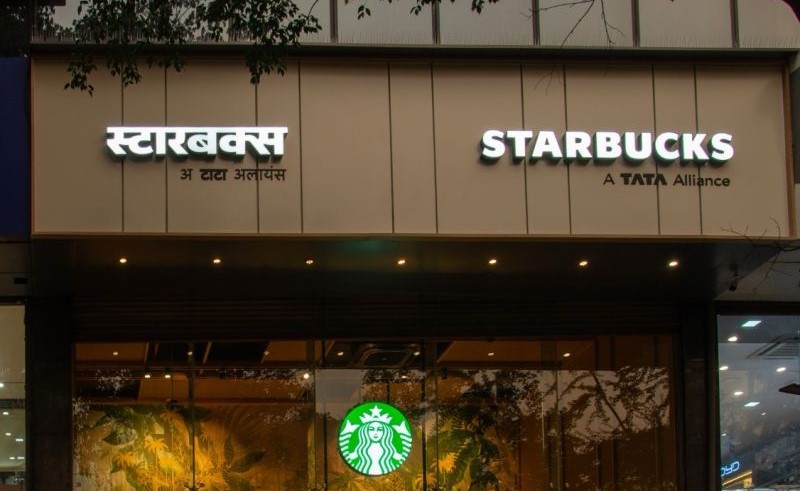
A Starbucks store in India. Source: internet.
Continue reading

The CMO’s Playbook – This Year’s Collage

Whenever the small-group discussions in the classroom get noisy, it means one of two things: the students are so interested that they forget they are in a classroom, or there are movies playing in laptops, hidden by the huddle of heads. When these discussions are about marketing strategy in The CMO’s Playbook, it’s the former.

Sometimes we teachers are happy when the class is loud.

*

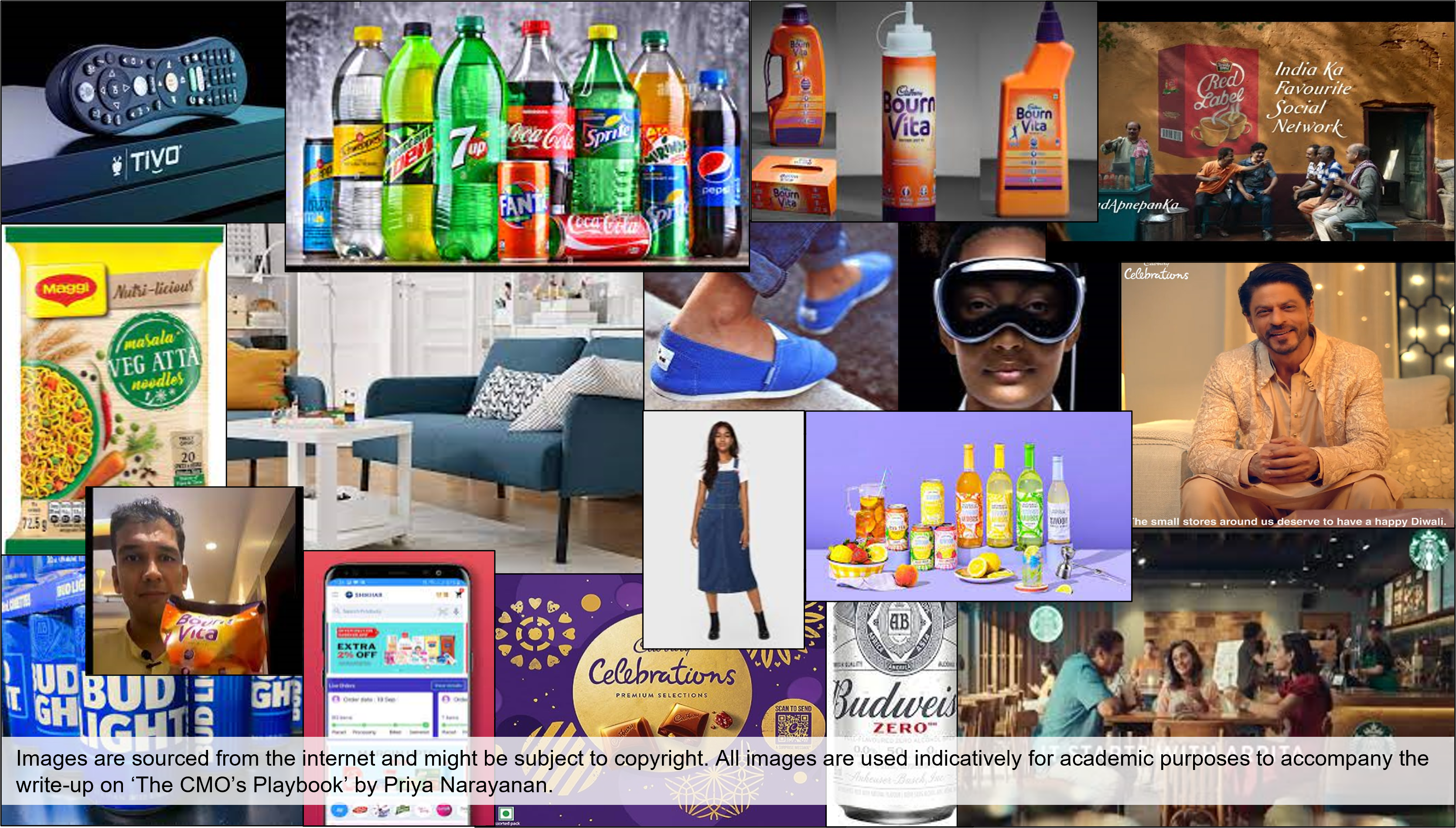
Here is a (hand-made) collage from the cases and contexts that we discussed in the course last year (2023 Jun-Aug). Can you identify all the companies and situations?!

*

Here are a few answers.

Coca Cola in India: A product portfolio worth boasting about, but who wants sugar and fizz now? This was (and is, and will continue to be) the dilemma of what is perhaps the world’s best built brand (for a brand backed by hardly any product worth its price). The new year spells interesting times for Coca Cola and more so for Coca Cola India with cannibals and competitors galore.

Continue reading

“India’s social network” is tea. The question is, which tea?!

First published July 2, 2023. Updated Oct 31, 2023 with a) an edited version of the ad shared by Red Label (following my article?!), and b) link to relevant research article.

© Priya Narayanan, Assistant Professor of Marketing, IIM Kozhikode. Views are personal.

A recent advertisement projects the humble tea as “India’s social network”. The ad is probably trending by this time, and worth at least one watch. The customer insight is spot-on. The video portrays various ways in which tea takes the form of friend requests, likes, shares, trends, stories, and so on in India, becoming a social network in itself. Engrossed as we are in the narrative, we forget that this is a brand’s commercial. Finally, though, the very last shot tells us that the ad is from Brooke Bond Red Label.

Screen shot from the “India’s social network” ad (watch the full ad here)

Well, as I watched the ad play, my thoughts centred on the cup of Kanan Devan (Tata Tea) tea that I usually drink in the morning and evening… steaming tea in a steel tumbler… the quantity never enough but I never make more… I am happiest when that tea is fully foamy at the top… and when I blow on it a teeny bit, the foam makes space for the beautiful brown color beneath… if the color is the right shade, the tea will be the right taste… oh yes, the tea packet at home is nearly finished and I need to buy another of the green packets soon…

Continue reading

Next Diwali, Let’s Avoid the Condescension of Doing Good? [Financial Express]

© Priya Narayanan, Assistant Professor of Marketing, IIM Kozhikode. Views are personal.

This article was first published on May 27, 2022 in the Financial Express and is available here on the publisher’s website. In this article, I present my take on the “condescension of doing good” that is visible in recent Diwali advertising, and urge marketers to put human values first.

The version below includes links to the relevant advertisements that I discuss.

It was Cadbury that hit upon the idea of brands doing good during Diwali in a seriously big way – the 2020 ad from Cadbury Celebrations showed how small local stores that were hit by the pandemic could be brought into the customer’s consideration set through geography-based hyper-personalization. “This is not just a Cadbury ad,” they said, and so we believed: the ad nudged us towards local stores. Thus it was that in the midst of the pandemic, Cadbury found a way to do good and be good, and yet gain marketing momentum.

But the next year, as the prestige factor was upped, Shah Rukh Khan’s charisma was deemed essential to do the same job for a similar ad by Cadbury. In this ad, Shah Rukh Khan names local stores in his voiceover and this, again, was powered by technology. It wasn’t too bad, except the realization that our purchases of Celebrations were funding the expense incurred in engaging the celebrity actor.

But this year? With its #ShopsForShopless ad of 2022, Cadbury has, despite its best intentions, fallen prey to “purpose”, the new catchword in marketing. Somebody (or worse, everybody) at Cadbury seems to have decided that for Celebrations to stand out, it had to be tagged with purpose. So, now that good old eating and gifting are not enough for Diwali, the Cadbury ad tells us to scan a QR code on the sweet box, help roadside hawkers set up virtual shops, and buy from such shops. For the kind of “help” that they received, the gratitude in the eyes of Damodar (not Damodarji?!) and his helper is nauseating in its excessiveness.

Continue reading

Me e Mia: An Introspection into Brand Love

Part I: The Customer’s Perspective

© Priya Narayanan, Assistant Professor at IIM Kozhikode. Views are personal.

The other day, I shared a thought on LinkedIn on the Mothers’ Day video of a jewelry brand. Mine wasn’t a well thought out analysis, it was simply a spontaneous reaction to the content of the video. Writing the post, however, made me wonder: why did I care so much? Why was I so strongly unhappy with the ad? (The tone implied in “golden shoulders” surprises me now!)

Well, eight years ago, I wrote about this very same brand, on wearing the Tanishq Mia mantle of confidence.

Rereading that led to some introspection, which then led to the conclusion: I am in love. Yes, I don’t wear much gold jewelry but I love the brand that is Tanishq. Naturally, I felt the possessive anger that only love can lead to when Tanishq made a statement I didn’t feel good about or agree with. So says the marketer in me about the consumer in me. Me e mia. Me and mine. Me and my brand.

Continue reading

The Customer Unmasked: What the Indian shopper will buy when the pandemic is over and out (Economic Times Brand Equity)

© Priya Narayanan, Assistant Professor of Marketing, IIM Kozhikode. Views are personal.

This article was first published on March 15, 2022 in the Economic Times Brand Equity Blog and is available here on the ET website. In this article, I present my take on what the “customer unmasked” would be like. Here is the full text of the article (caution: long read ahead!).

*

With the pandemic on the decline, it is a good time for marketing managers to gather their thoughts on what the future will bring. Shopping behavior of customers is going to change, but in what way? Five key insights tell us what the post-pandemic future of shopping could look like.

Continue reading

Advertising in the Pandemic’s Reality

© Priya Narayanan, Assistant Professor of Marketing, IIM Kozhikode. Views are personal.

Advertisements have changed quite a bit to reflect the reality of our daily struggle against covid-19. They no longer casually encourage consumers to splurge thoughtlessly: more and more advertisements are giving us reasons to buy. And more and more products are associating their reasons with the current situation. Handwashes, sanitizers, and Disney+Byju’s aside, there are a few interesting ads. Consider a few examples.

Recently, I was told that Lakme’s lip products have taken a hit, at least as evident from their product display on e-commerce sites. Natural enough, I thought, although I was unable to verify the news. After all, when lips are hidden by masks, the only time you can show off your lipstick is when you are eating (which happens only at home) or when you are in front of a webcam with a virtual audience. Well, that has not deterred either Lakme or Garnier. The same pandemic that has reduced consumption of lipstick (literally too!) has deterred visits to beauty parlors, implying that consumers need a substitute. Lo and behold, here is the “sheet mask” that gives the effect of a parlor-like “facial” in fifteen minutes! See a sample below, from the cosmetics seller Nykaa.

Continue reading

Why India Needs Swiggy More Than Ola

© Priya Narayanan, Assistant Professor of Marketing, IIM Kozhikode. Views are personal.

Before I begin this post, let me confess that I use Ola once in a while. In fact, I was sitting in an Ola cab at a traffic jam when the scene I am about to narrate happened. The vehicle in front of me was a medium-sized truck, and from the exterior it was clear that this truck carried garbage. In that case, why did I give it a second glance? Because there was a man inside! In the garbage part of the van (not the driver side which I anyway couldn’t see), beside the pile of black garbage bags with their mouths tied, this lanky guy stood bent over, his jeans pushed up to his knees, his hands working furiously. He picked out mineral water bottles – the smaller kind that we usually see at parties and throw away so casually – and dropped them into a big grayish bag. Each time he saw water in a bottle, he would pour it on his feet and wipe it down (to cool the heat of standing the entire time in that airless shaking truck?). What he didn’t pick from the black bag were largely paper plates and paper cups, most having some leftovers, so the waste was probably from a party. This activity went on even as the signal changed to green.

Despite all the cynicism that India’s cities (Gurgaon, Mumbai, Delhi, Bangalore, and Noida) have taught me, and despite being told that “this is how the lower classes live, what is your problem, isn’t the AC in your cab running?”, I was shocked. Right in front of me stood a guy who made a living sorting out plastic bottles from garbage, standing inside a moving truck. It made me wonder: is there anything that any of us, seeing and then quickly unseeing the reality in front of us, can do? It might help to segregate waste so that workers like him do not have to repeatedly dip their hands into garbage to retrieve bottles. But segregation would relieve him of his job! Imagine we all decided to segregate our plastic and paper and wet waste. What would happen to our waste workers?

Continue reading