The Mobile-Free Classroom – A Dream Come True

© Priya Narayanan, Assistant Professor of Marketing, IIM Kozhikode. Views are personal.

This article was first published on LinkedIn and is available here.

Don’t get me wrong, I don’t have anything against mobile phones (just an allergy, as my students know).

But I recently had a dream-like experience of teaching a class where students did not have mobile phones anywhere near them. Dream-like, because the mobile phone is every student’s partner-in-crime during classes. So much so that sometimes I miss students who engage in good old doodling or hangman.

These students had deposited their phones in a basket (they did not have a choice) and let themselves into the uncharted territory of sitting in class without the “adult pacifier” at hand (see image, research by Shiri Melumad and Michel Tuan Pham). Not even laptops or tablets. The credit for the mobile-free class goes to the HR manager. I spoke with Pradnya for just two minutes, but her willpower was evident, and her good intentions were obvious.
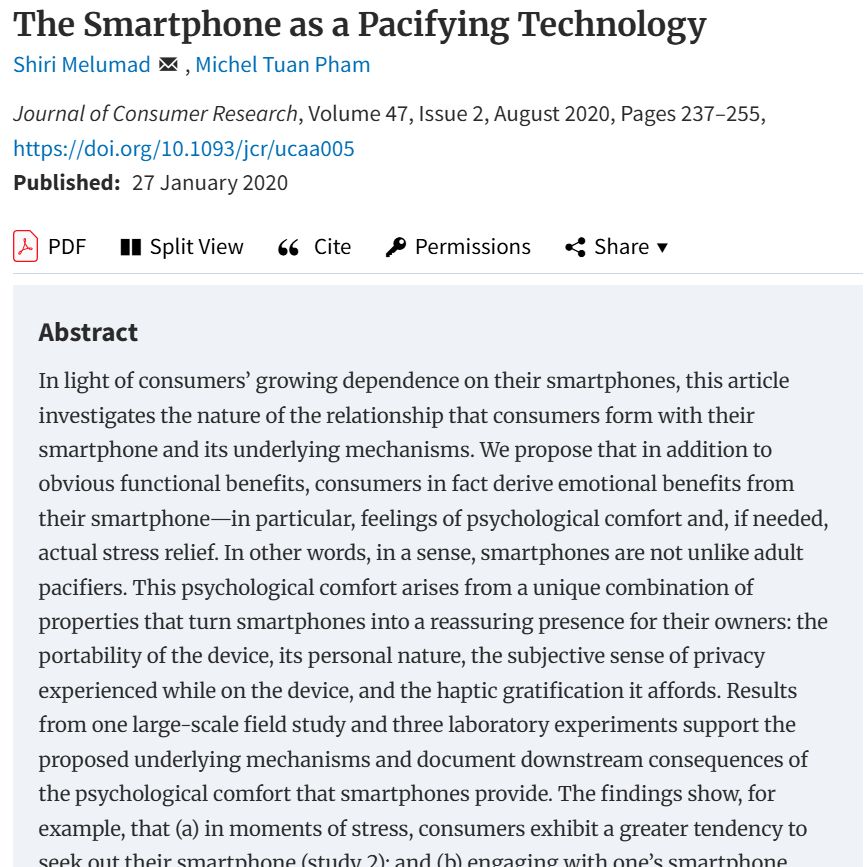
Source: https://academic.oup.com/jcr/article/47/2/237/5716332


And so, I taught my first ever classroom where mobile phones were absolutely absent. Not just invisible or inaudible, but really absent from the minds of the students.

When the mobile phone is present, it has a pull, it is just waiting to be checked, and can’t be denied. So even if a student decides not to use the phone, but the phone is on the desk or even in the bag, the silent call of the phone continues to distract (see image, research by Adrian Ward, Kristen Duke, Ayelet Gneezy and Maarten Bos). In the mobile-free class, there is no such distraction.
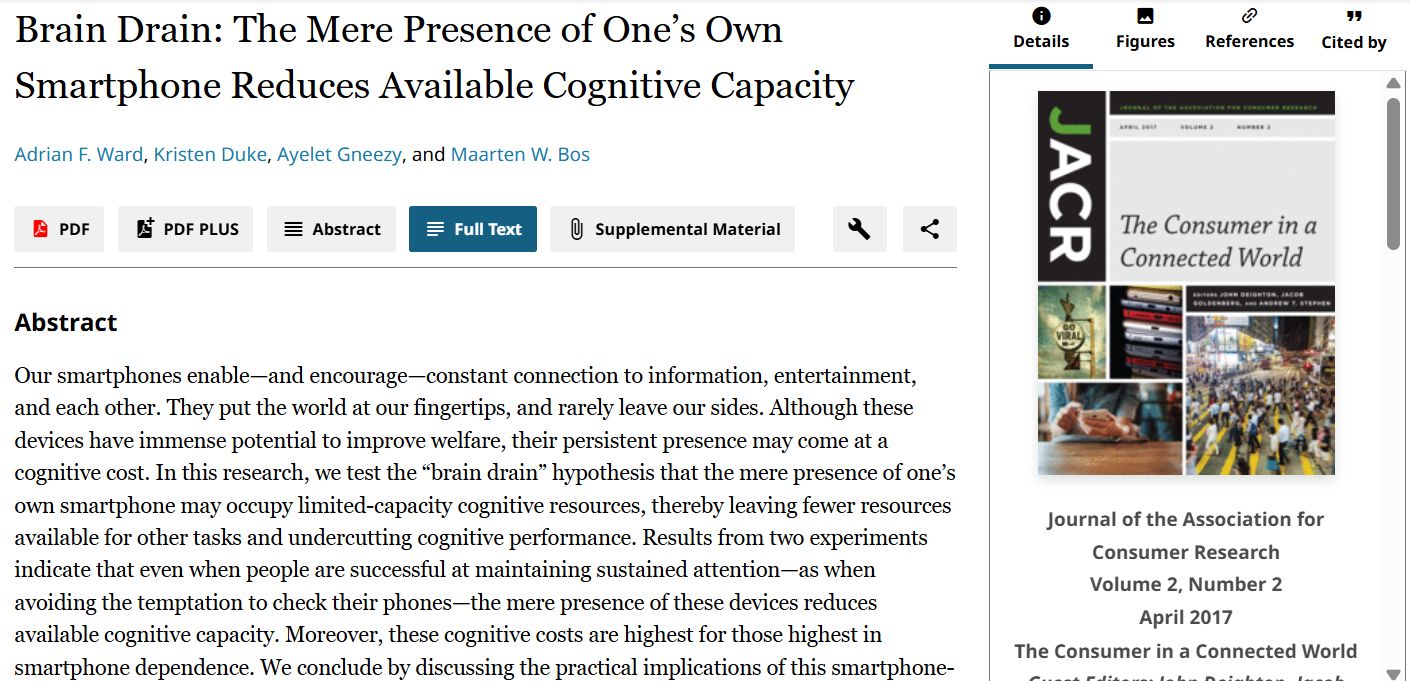

Source: https://www.journals.uchicago.edu/doi/abs/10.1086/691462


Now, I do not yet have proof, but as someone who has taught graduate students and executives for about 800 hours, low distraction classes (classes where students oblige with my request to put their phones away) operate at a higher plane of engagement and learning compared to high distraction classes. The absence of electronic devices activates the one device which will accompany us through life, even in the age of AI – the brain!

Students often don’t get an opportunity to notice the benefits of a mobile-free class, and this creates an understandable resistance to putting away the phone. But objective research and my experience concur on this observation. And every year there are a few students who thank me (Aparna D in The CMO’s Playbook was the first!) for requesting that they avoid using the phone. And that’s where the proof of the pudding lies… in switching off the phone and letting the class take you places.

So next time your teacher requests the class to put away your phones, do so with a smile. It’s one small step for a student, one giant leap for education!

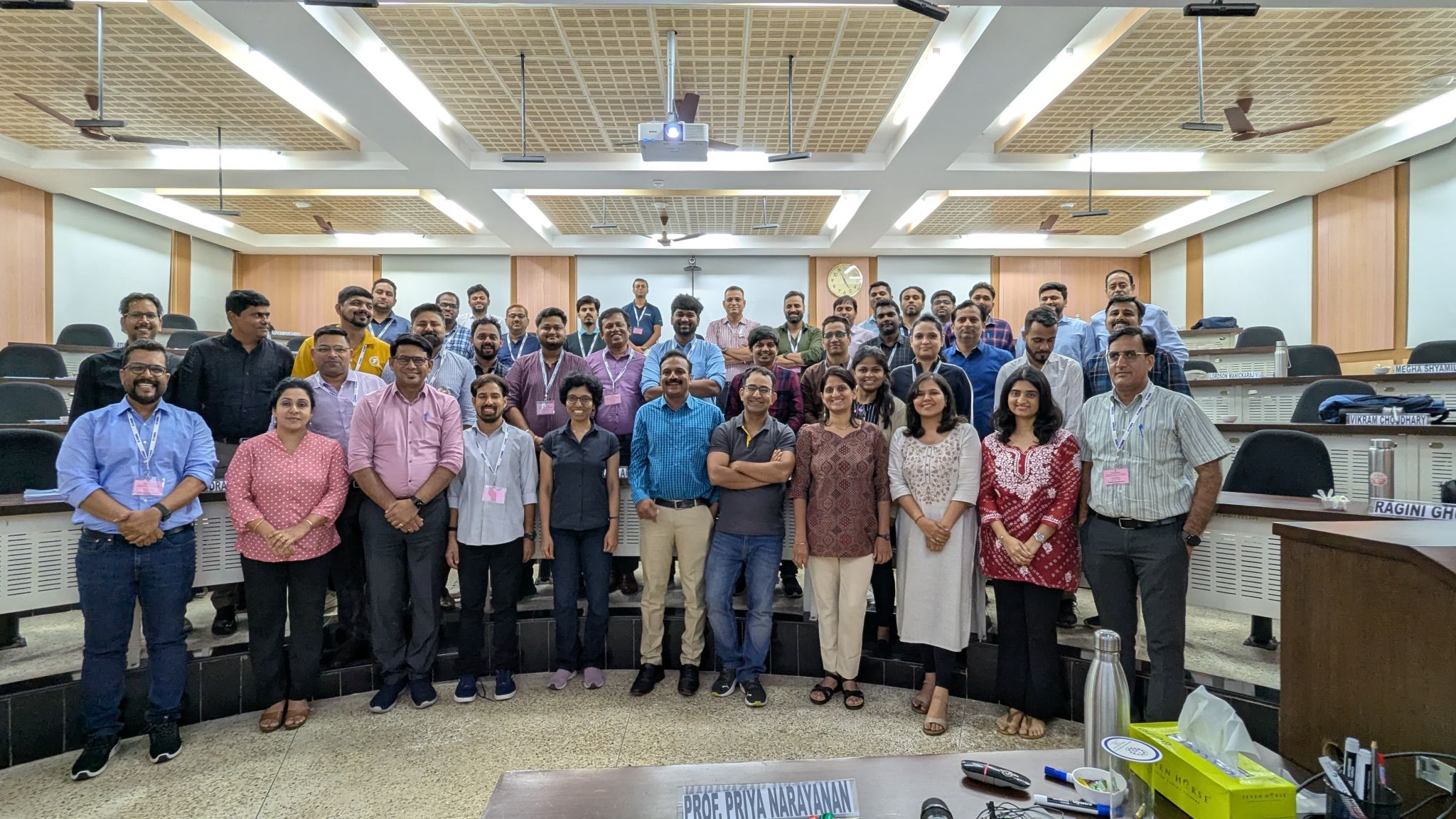
Here’s all of us after six hours of refreshing freedom!
*
How NOT to Write a Research Internship Application!

After writing this up, I was in two minds whether to post it. But when I received an application that, quite confusingly, began: “Dear professor, my name is [your name]. I am a third-year student…”, I decided that time for this post had come. So here goes.

© Priya Narayanan, Assistant Professor of Marketing, IIM Kozhikode. Views are personal.

*

Dear internship applicant,

Every so often, I receive an email from someone among you – undergraduate and graduate – who wants to do a research internship with me. They are mostly alike. The ones I do take a risk on, by inviting for an interview and often taking onboard for a piece of work, are different, though. How? Those have a genuineness and care to the writing.

That set me thinking and I listed here, for your benefit, what to do and what not to do (the latter first) when writing a research internship email. This is all based on my experiences with prospective interns like you. Much of this is written in a light vein, in the spirit of laughing over one’s own flaws and picking up from wherever we are. I hope you have fun reading and applying this, because I had fun writing it!

So, here’s what to avoid in your email:

Continue reading

Learning Marketing from Shelby Hunt – A Tribute

(c) Priya Narayanan, Assistant Professor of Marketing, Indian Institute of Management Kozhikode

Caution: this article is on academic research. If that isn’t your cup of tea, you could read my recent popular article on The CMO’s Playbook instead.

Context of this article

About three months ago, reading (again) Shelby Hunt’s “The nature and scope of marketing”, I decided to write to Prof. Hunt, not with any particular research question or objective, but to interact once with the great mind that could, in one sweeping paragraph, summarize all of marketing till then:

“During the past three decades, two controversies have overshadowed all others in the marketing literature. The first is the “Is marketing a science?” controversy sparked by an early JOURNAL OF MARKETING article by Converse entitled “The Development of a Science of Marketing.” Other prominent writers who fueled the debate included Bartels, Hutchinson, Baumol, Buzzell, Taylor, and Halbert. After raging throughout most of the ’50s and ’60s, the controversy has since waned. The waning may be more apparent than real, however, because many of the substantive issues underlying the marketing science controversy overlap with the more recent “nature of marketing” (broadening the concept of marketing) debate. Fundamental to both controversies are some radically different perspectives on the essential characteristics of both marketing and science.” (Hunt 1976, p. 17, emphasis added)

Reading this the first time, towards the end of the second year of my PhD, I was not impressed. But, having read and written and thought and analysed much, I start to sense in Hunt’s writing a comprehensiveness, clarity, and directness that was not visible to me earlier. To learn that the author of this writing is no longer with us and that the meeting I considered requesting (I even wondered which email address would Prof. Hunt be reachable at, since he had recently retired from his long-standing faculty position), left me with a sense of loss that I did not anticipate. This article is an attempt to understand why.

Continue reading

Digital Customer or Digital Marketing?

© Priya Narayanan, Assistant Professor of Marketing, IIM Kozhikode. Views are personal.

SEO, influencer marketing, content marketing, social media strategy… these are some of the terms that exemplify popular views of digital marketing. But when trying to comprehend digital marketing, two problems arise: What exactly is “digital” in digital marketing? And does digital marketing include anything beyond digital communication?

In this article, I attempt to answer these questions based on my experience in marketing and digital marketing, experience gained through learning, teaching, and consulting. I also include definitions by researchers and the American Marketing Association, and offer a book suggestion for those interested in learning more.

Continue reading